Precision Polishing Tools
SAG-Tek's precision polishing tools are engineered for Shape Adaptive Grinding, a process that uses compliant, pressure-controlled contact to achieve consistent material removal and mirror-grade surface finishes on freeform, curved, and complex 3D geometries.
Use the interactive tool selector to find the right geometry, bond type, and grit grade for your component material, surface finish target, and machine setup. Takes less than 2 minutes.
SAG Tools Range
Each tool is engineered for a specific class of surface and component profile. All tools use compliant, pressure-controlled contact, conforming to the workpiece. Available in resin-bond and nickel-bond diamond grades for different finishes.
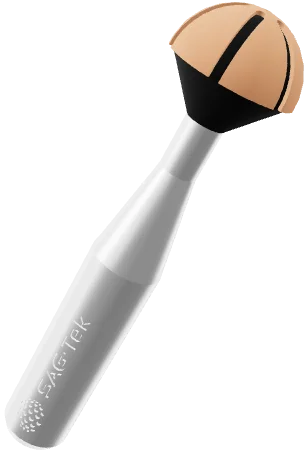
Teardrop
Optimised for aspheric, freeform, and complex 3D surfaces. The teardrop geometry delivers consistent SAG contact on radii that bonnet or cap tools cannot. Teardrop tools are often used in a similar fashion to ball nose cutters.
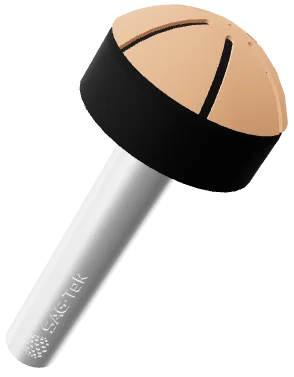
Bonnet
The bonnet provides consistent contact on convex, concave planar or freeform surfaces. Delivering controlled and uniform material removal on mould cavities, turbine blades, and curved optical elements.
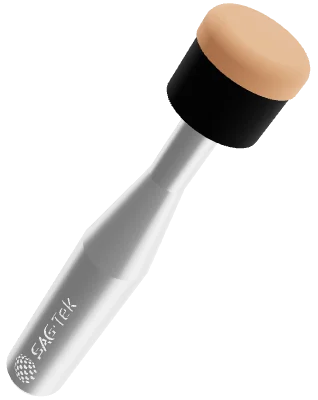
Cap
The most versatile SAG tool geometry. The cap tool can be used in most applications. This jack of all trades tool can be used to polish anything from recessed features to simple stepped geometry.
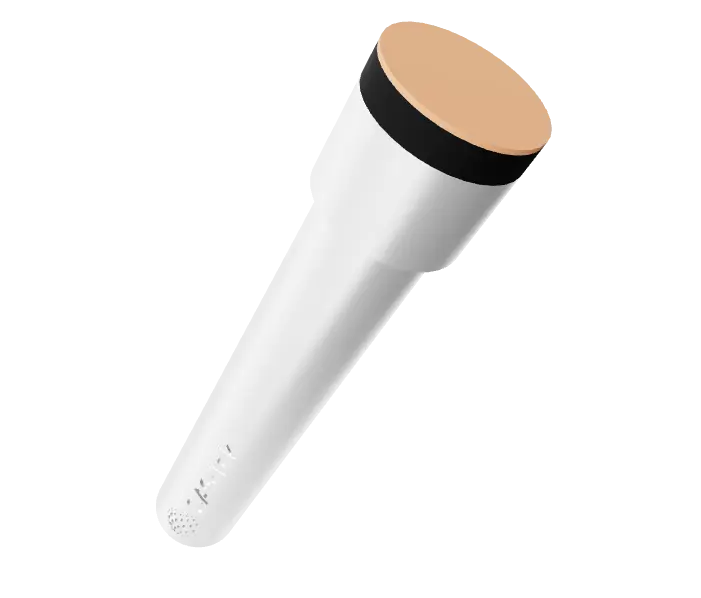
Disc
Designed for flat, near-flat, and convex surfaces. The disc tool provides high contact area and efficient material removal. Ideal for large optical flats, die faces, and precision engineering surfaces.
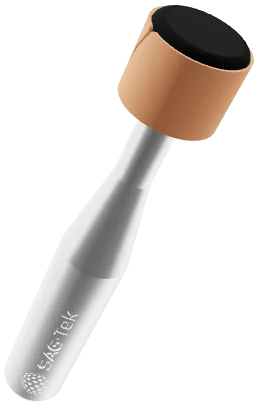
Drum
Engineered for bores, internal channels, and cylindrical components. The drum geometry can maintain consistent SAG contact on internal and external rounded surfaces or flat side faces, where other tool types cannot operate.
Grinding and Polishing
in One Process
Shape Adaptive Grinding (SAG) combines surface grinding and precision polishing into a single process. Unlike rigid abrasive tools, SAG tooling conforms elastically to the workpiece. Maintaining consistent contact pressure across the surface, eliminating the dependency on operator skill and machine precision. The result is a faster, more repeatable surface finishing process with measurably lower scrap rates.
Ideal for Complex
Surface Finishing
SAG tools can be utilised on a wide range of materials and geometries. Common applications include: